
Materials, Seats and Actuation
Body Materials
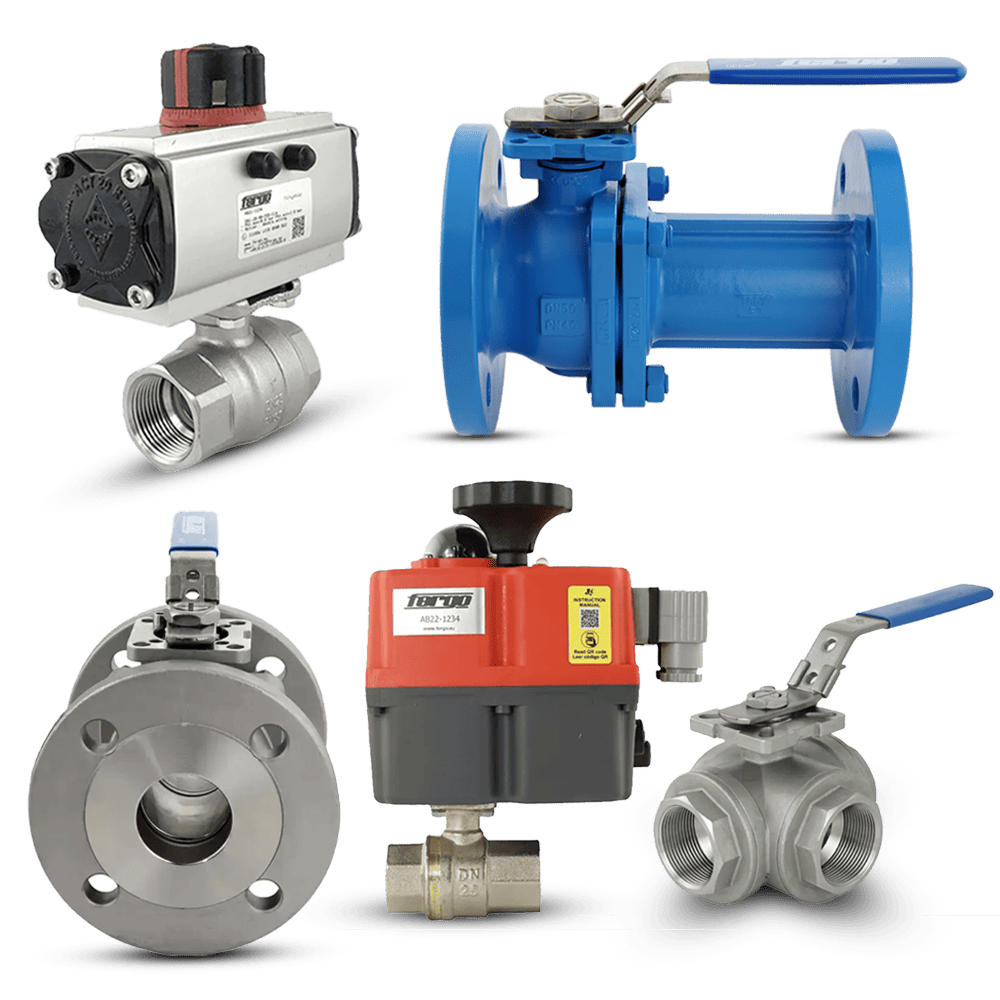
Stainless steel 1.4408 (CF8M / AISI 316) is the standard material for process applications and offers increased resistance to chlorides and acids through its molybdenum content. Cast steel 1.0619 (ASTM A216 WCB) is used for steam, thermal oil and higher pressures where mechanical strength is the priority. Ductile iron GGG40 covers water, wastewater and utility applications economically. Brass CW617N is the proven solution for domestic installation, compressed air and heating systems from DN8 to DN50.
Seat Materials and Sealing System
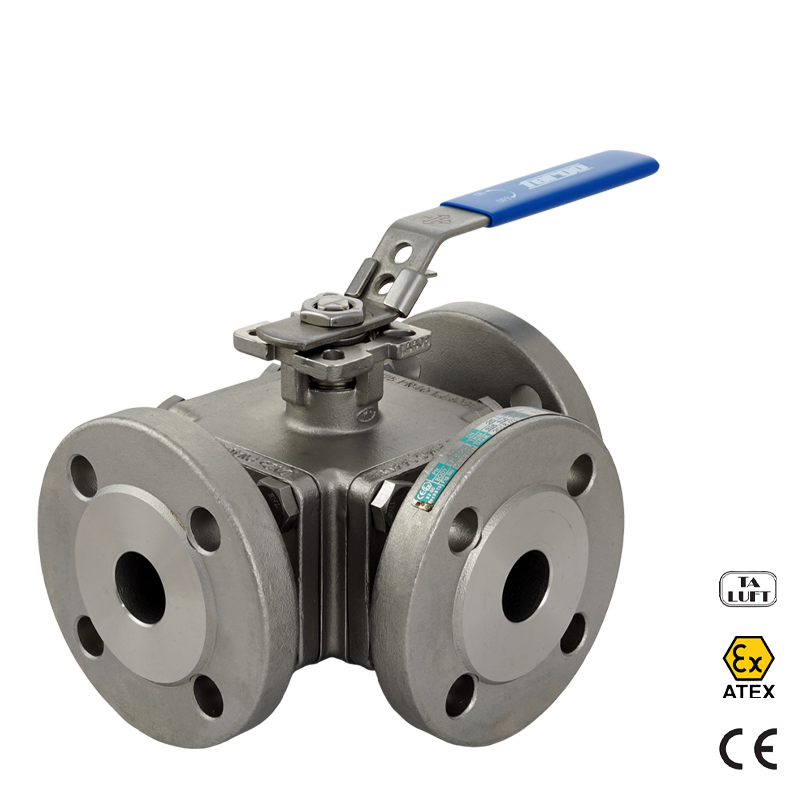
The seat ring determines the temperature range and chemical resistance of a ball valve. TFM 1600 — a modified PTFE — operates from –29 °C to +175 °C and shows markedly less cold flow than standard PTFE, which keeps sealing performance stable over long service intervals. PTFE with 15 % glass fibre improves pressure and dimensional stability at higher temperatures. Virgin PTFE offers the broadest chemical resistance at moderate pressures. FKM/Viton completes the range for mineral oils, fuels and petrochemical media. The stem is double-sealed to atmosphere and, in the TA-Luft version, additionally secured against fugitive emissions.
Bore, Two-Way and Three-Way
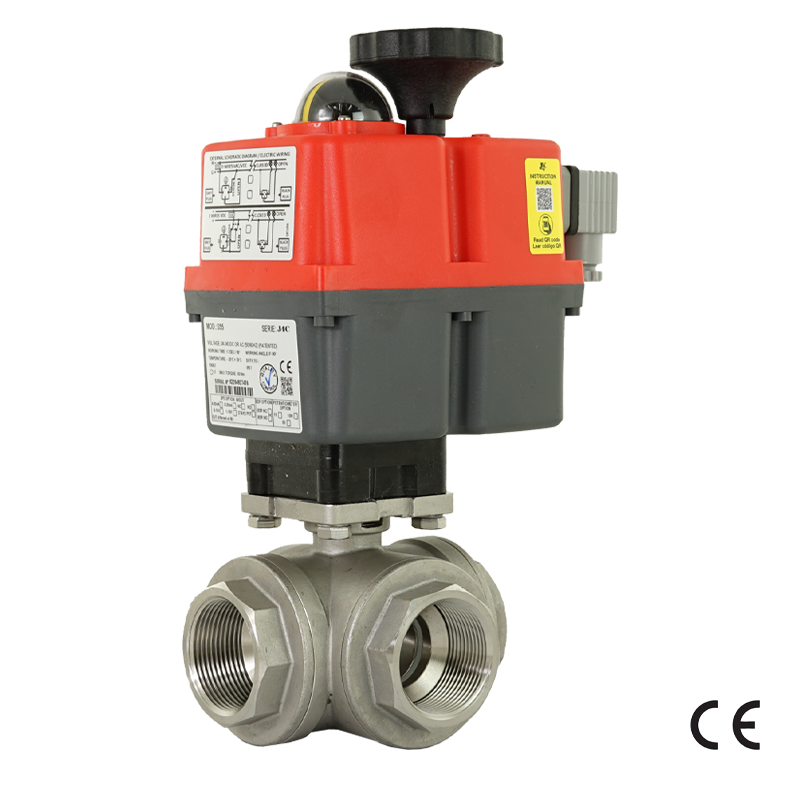
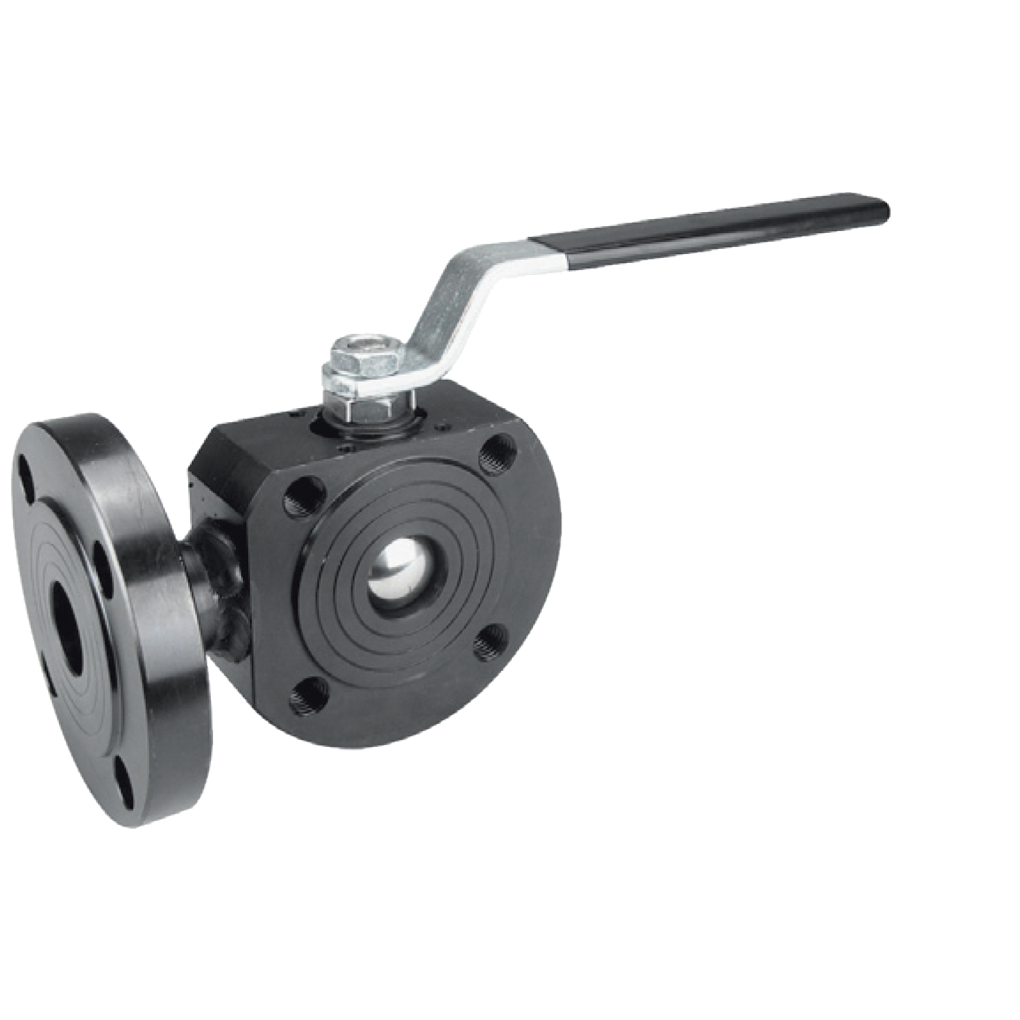
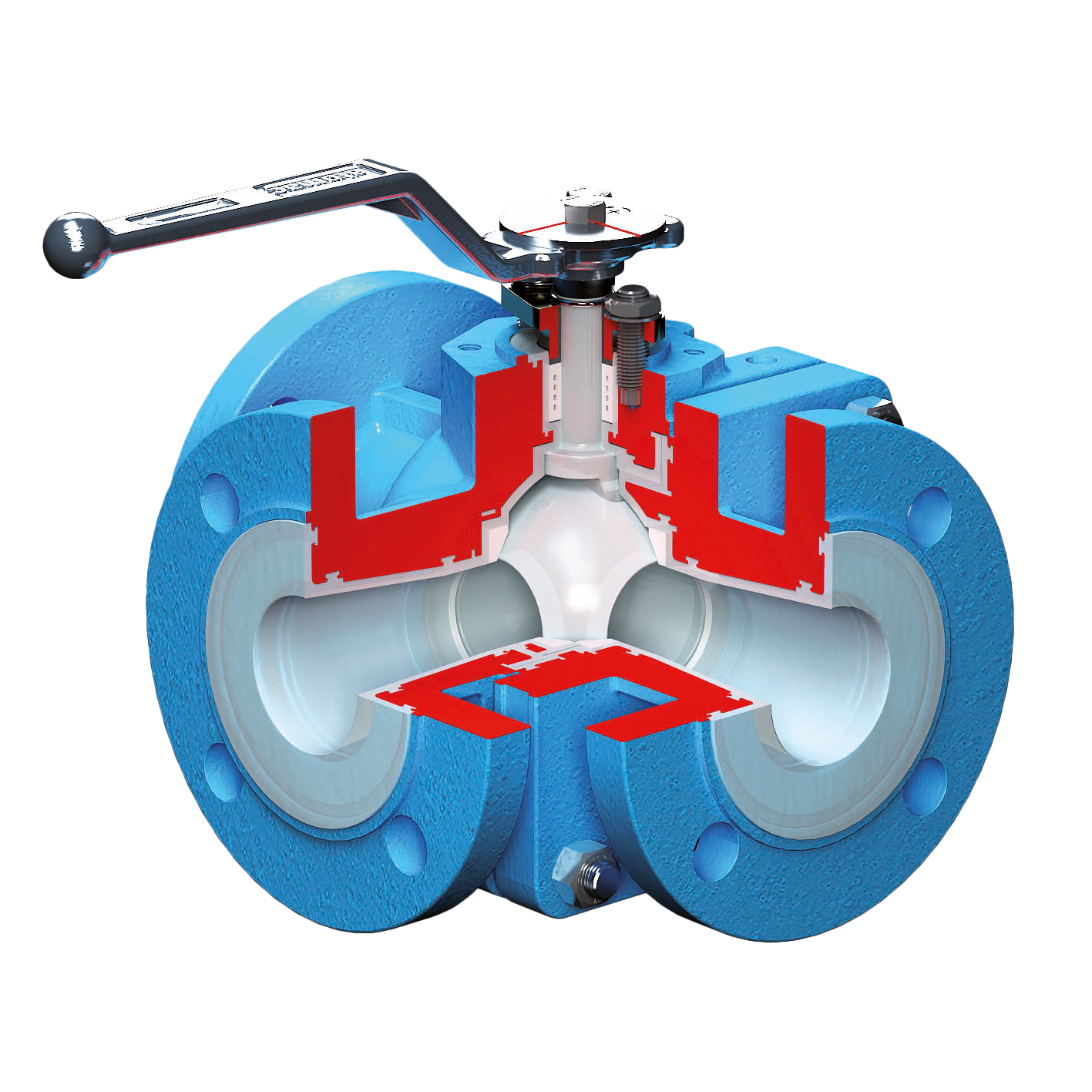
With full bore, the ball bore matches the pipe inside diameter — pressure drop stays minimal, and the line remains piggable. Reduced bore drops the ball by one nominal size and lowers weight, operating torque and purchase cost, but introduces a measurable pressure drop. In three-way form, the L-port switches flow between two outlets, while the T-port mixes two inlets or splits one inlet across two lines.
Actuation and Automation
The ISO 5211 mounting flange allows adapter-free fitting of hand levers, worm gearboxes, pneumatic quarter-turn actuators or electric actuators. For process automation, NAMUR solenoid valves, limit switch boxes for position feedback and positioners for modulating control complete the valve into a full automation assembly.