
Industriearmaturen Ball Valves

Ball Valves in Stainless Steel, Brass & GGG40 — Buy Online

Ball valves with threaded, flanged or weld-end connection, stainless steel 1.4408, duplex, brass or ductile iron, DN8 to DN300, up to 64 bar, manual or actuated.

Buy now in the shop

Ball Valves
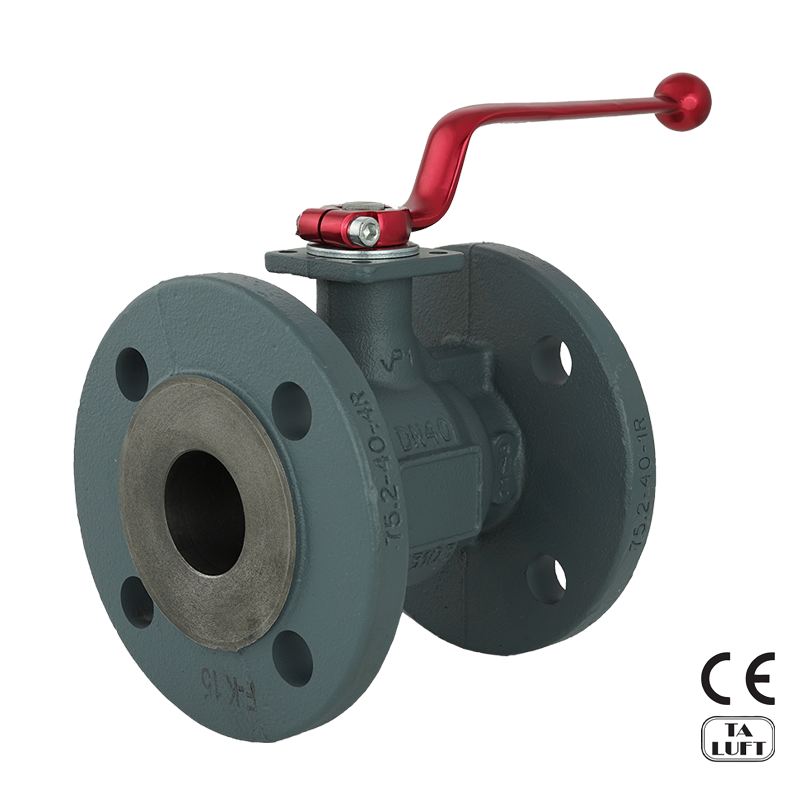
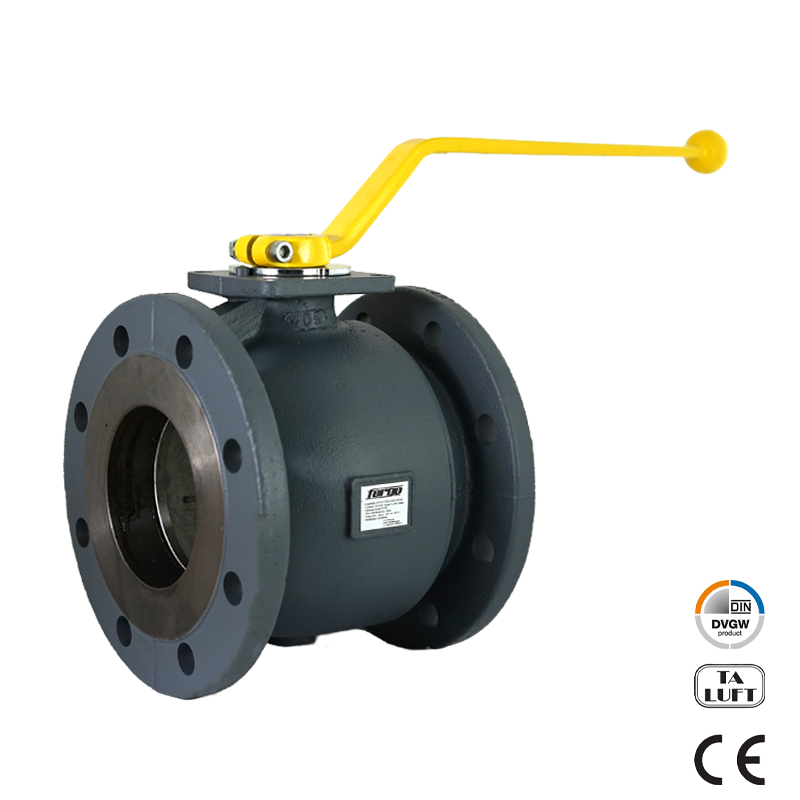
  • Gas Ball Valve KH122G

    Gas Ball Valve KH122G

    Sizes: DN15 – DN200

    Case material: Cast steel 1.0619

    Certificates: DVGW-Gas, TA-Luft, PED, Fire-Safe Design

    Operations: Electric, pneumatic (double-acting and single-acting), hand lever

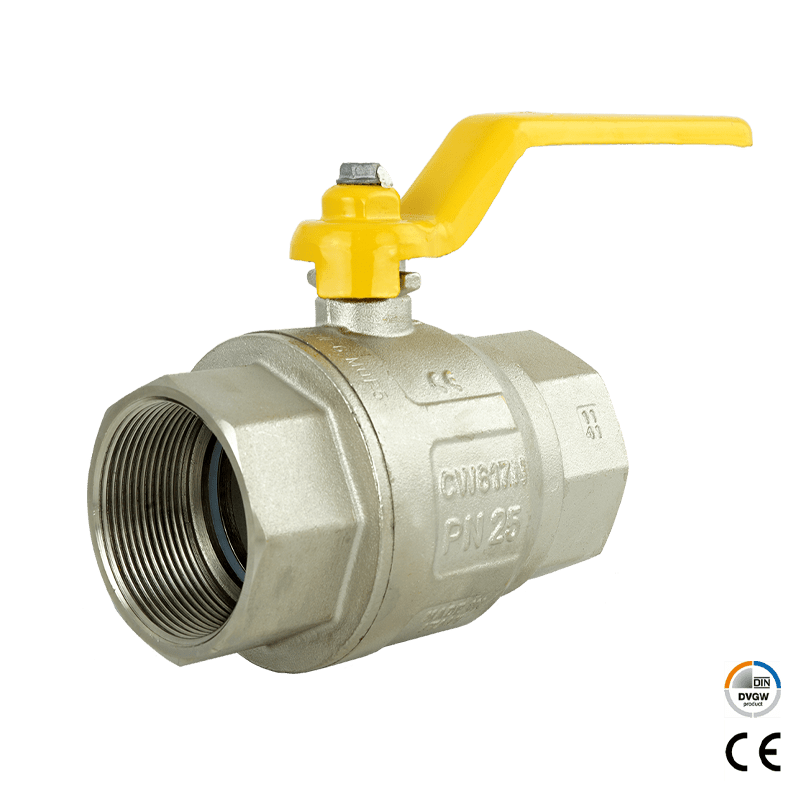
  • Stainless steel gas ball valve KH124G

    Stainless steel gas ball valve KH124G

    Nennweite: 1/2" to 2"

    Body/ball: Stainless steel 1.4408

    Connection: Female thread Rp to DIN EN 10226-1 (ISO 7/1)

    Operations: Electric, pneumatic double-acting & single-acting, lever

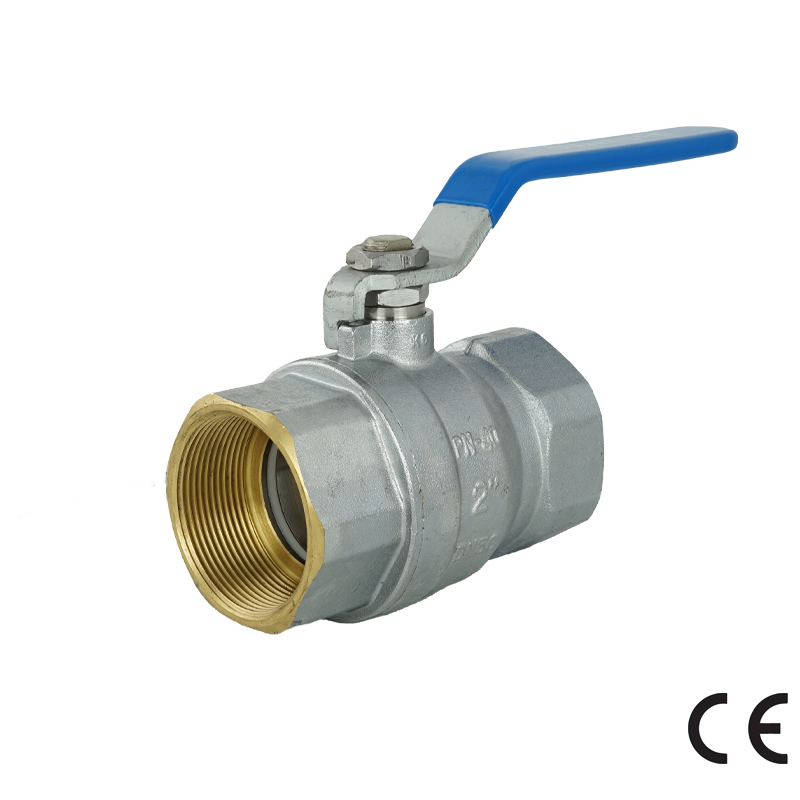
  • Drinking Water Ball Valve KH124W

    Drinking Water Ball Valve KH124W

    Nominal diameter: 1/2 to 2"

    Body/Ball: Stainless steel 1.4408

    Connection: Female thread Rp according to DIN EN 10226-1 (ISO 7/1)

    Operations: Electric, pneumatic double-acting & single-acting, lever

  • Stainless Steel Ball Valve KH113

    Stainless Steel Ball Valve KH113

    Sizes: 1/4" to 2"

    Port: Full port, V-port

    Case material: Stainless steel 1.4408

    Connection: Internal thread

    Operations: Electric, pneumatic (double-acting and single-acting), hand lever

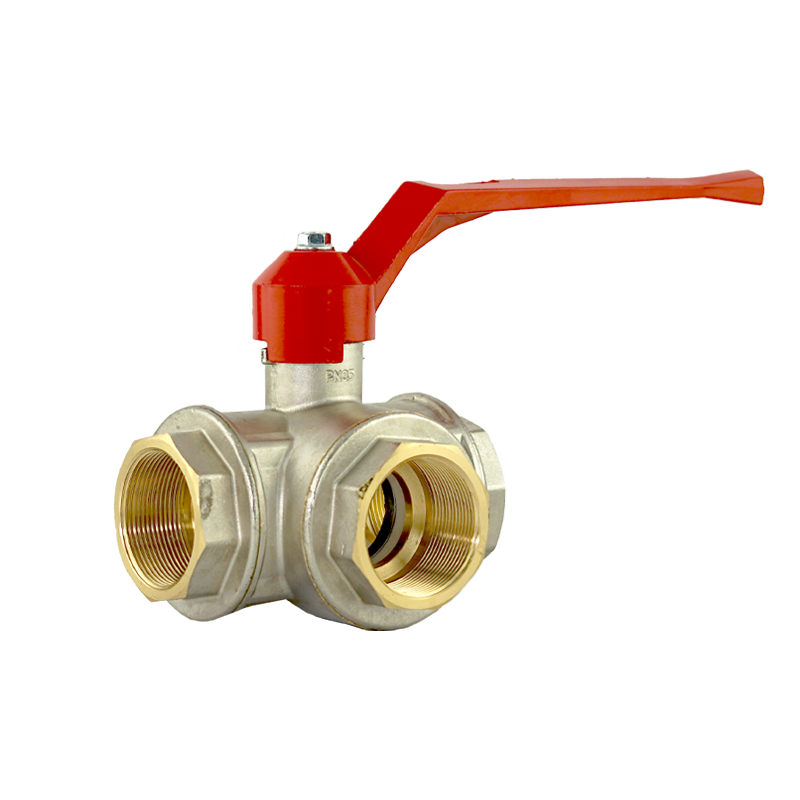
  • 3-way ball valve, stainless steel type KL/KT103

    3-way ball valve, stainless steel type KL/KT103

    Sizes: 1/4" to 2 1/2"

    Case material: Stainless steel 1.4408

    Connection: Threaded

    Operations: Electric, pneumatic double-acting & single-acting, lever

  • 3-way flanged ball valve KL112/KT112

    3-way flanged ball valve KL112/KT112

    Sizes: DN15 to DN100

    Flange connection: PN10, PN16, PN40

    Operations: Electric, pneumatic double-acting & single-acting, lever

    Port: L & T type

Produktübersicht

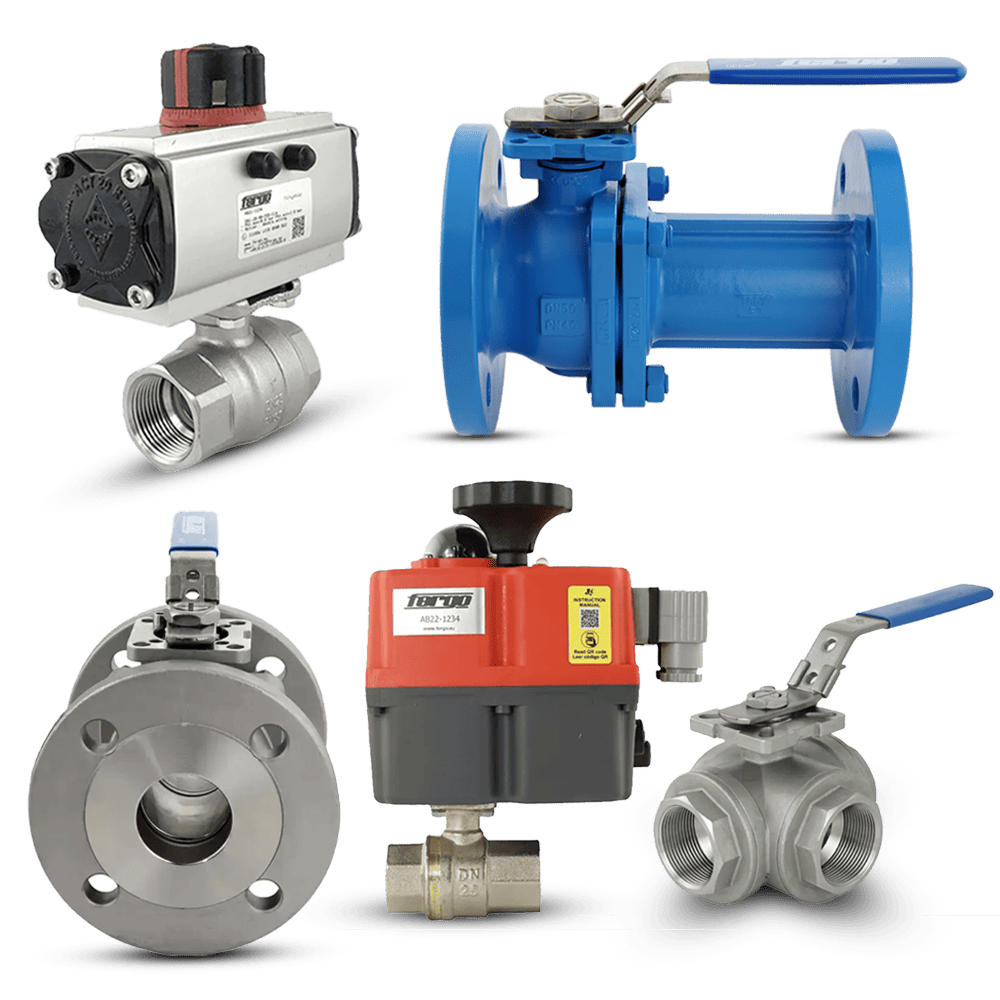
Ball Valves: Optimum Control for Liquids and Gases

ball valve shuts off the flow with a bored sphere that rotates a quarter turn. In the open position the bore aligns with the pipe, so the medium passes almost without resistance. A 90-degree turn then closes the line completely. This design therefore combines fast switching, tight sealing and low maintenance in one compact valve.

Fergo supplies industrial ball valves from DN8 to DN300 for operating pressures up to 64 bar. Body materials include stainless steel 1.4408 (CF8M), duplex stainless steel 1.4470 (CD3MN), steel 1.0460, brass CW617N and ductile iron GGG40. For aggressive media, versions with PFA or conductive PFA-L lining are available as well. Connections cover female threads to ISO 7-1 (EN 10226-1) and ISO 228-1, flanges to DIN PN10 through PN100, ANSI Class 150 and 300, plus weld ends to ANSI B16.25. Face-to-face lengths follow EN 558-1 series 1, 14, 15 and 27.

Ball valves serve the chemical and petrochemical industry, pharmaceutical production, food and beverage plants, water treatment, HVAC systems and general plant engineering. Operators can choose a hand lever, a gearbox, a pneumatic actuator (single or double acting) or an electric actuator in 24 V, 230 V, 240 V and 400 V. Consequently, the same valve body suits both manual isolation and fully automated process control. Fergo also configures complete automation packages with limit switch boxes and NAMUR solenoid valves on request.

01 Threaded Ball Valves

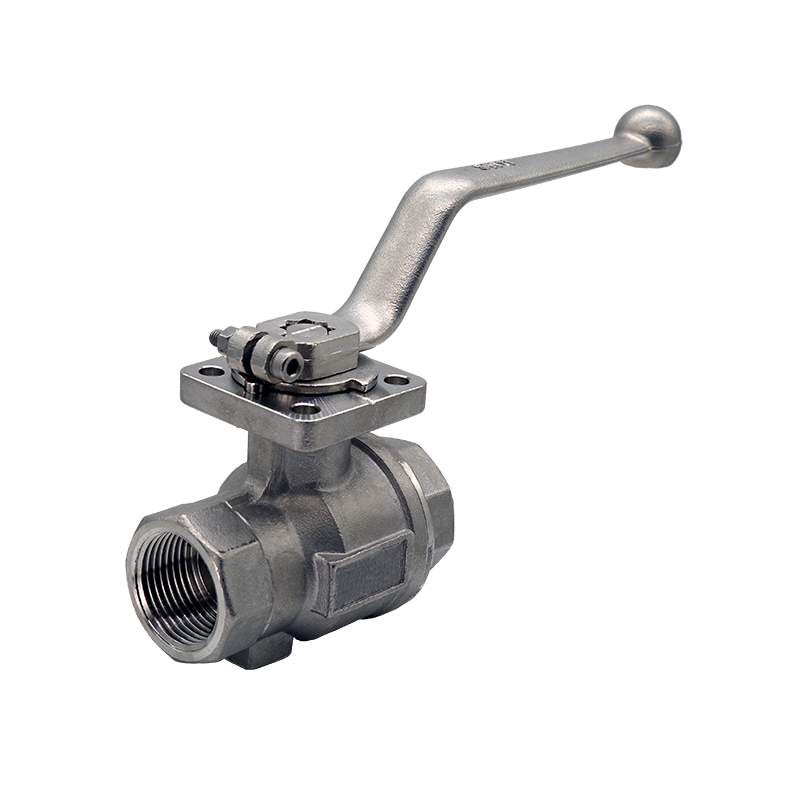
The threaded ball valves cover DN8 to DN100 with female threads to ISO 7-1 (EN 10226-1) or ISO 228-1. The KH104 series uses a chrome-plated brass body and reaches 40 bar. The KH109 and KH113 series, by contrast, are made entirely of stainless steel 1.4408 (CF8M) and withstand up to 63 bar. Full-bore, two-piece and three-piece designs are all available.

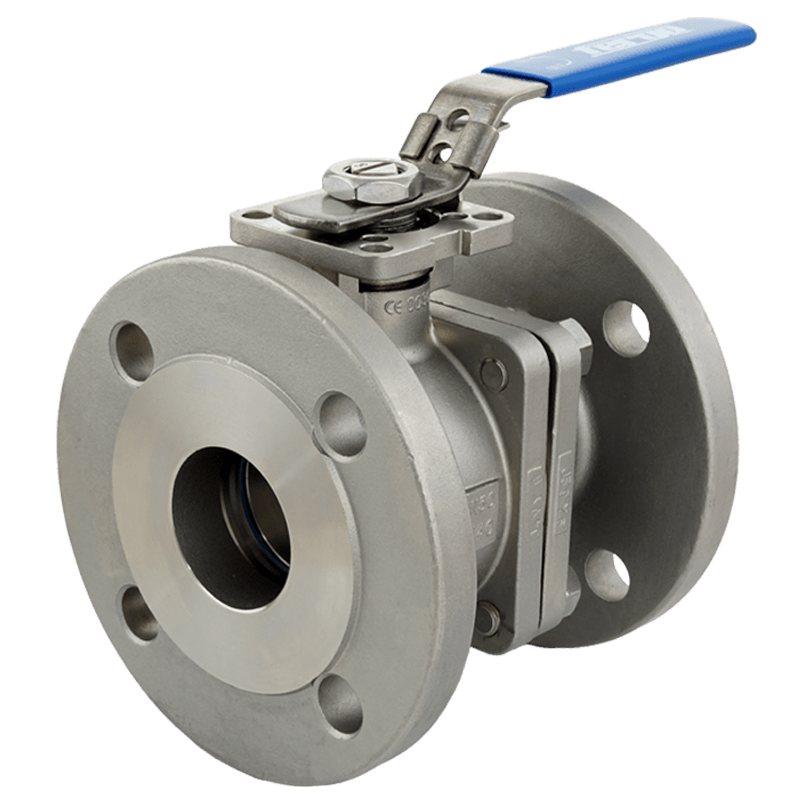
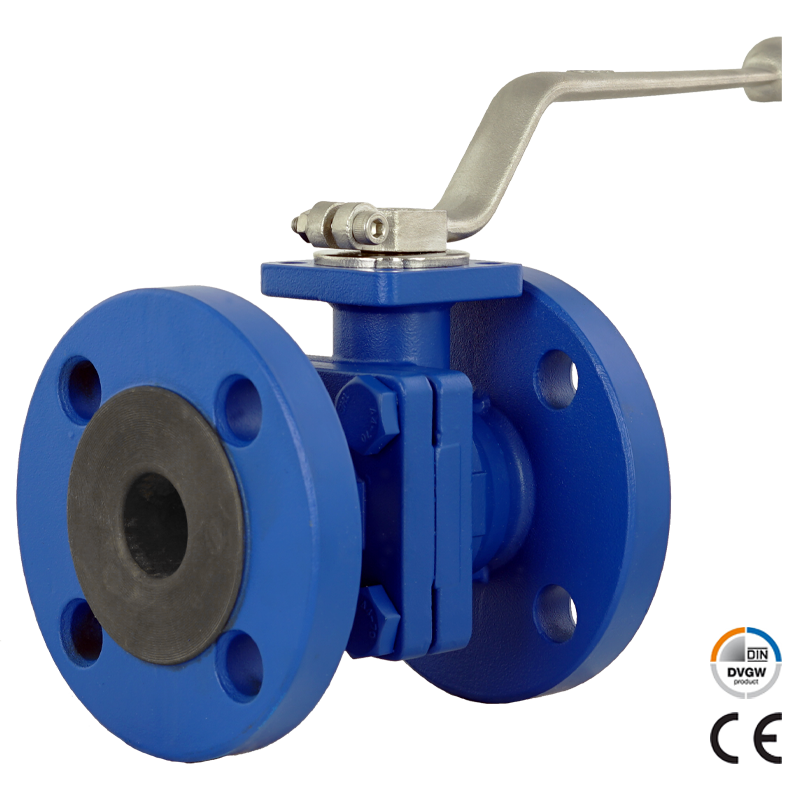
02 Flanged Ball Valves

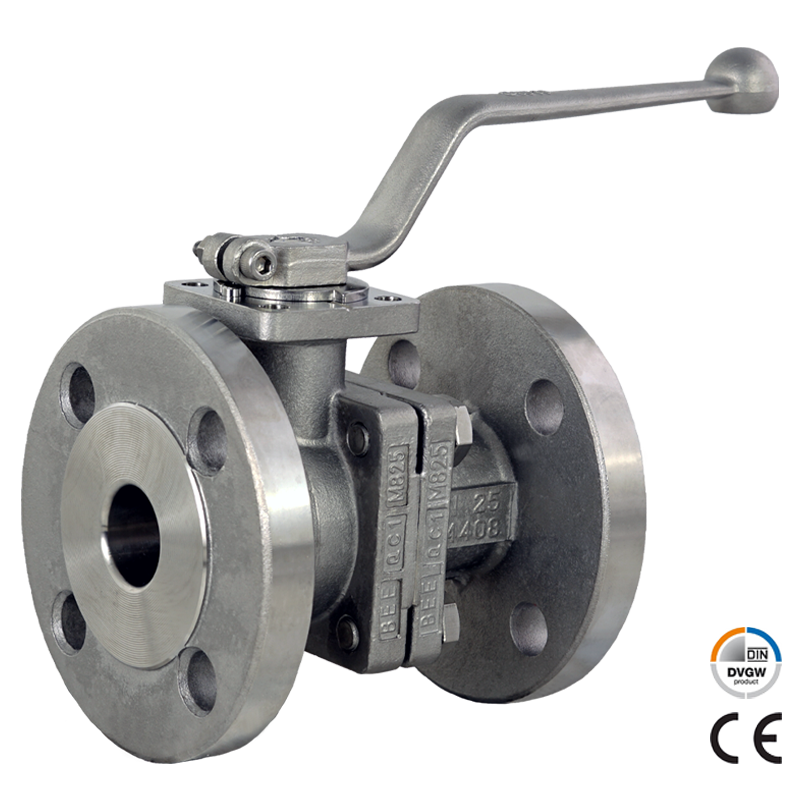
For larger nominal sizes Fergo offers flanged ball valves from DN15 to DN300. Flanges comply with DIN PN10 to PN40 as well as ANSI Class 150 and 300. Bodies come in stainless steel, steel and ductile iron GGG40. Many models carry DVGW, Fire Safe and AD2000-A4 approvals, so they suit safety-critical and emission-relevant installations.

03 3-Way Ball Valves

The 3-way ball valves of the KL103 (stainless steel) and KL113 (brass) series divert, mix or distribute the flow. An L-bore switches between two outlets, whereas a T-bore also allows a straight-through and a mixing position. Both bore types are available with hand lever, pneumatic or electric actuation from DN15 upwards.

04 Welding Ball Valves

Weld-end ball valves integrate permanently into the pipeline. The weld ends follow ANSI B16.25, which eliminates flange gaskets as a potential leak path. This design therefore suits high-pressure lines, buried pipework and installations where a fully welded system is specified. Bodies are made of stainless steel or steel 1.0460.

05 Pneumatic Ball Valves

Pneumatic ball valves switch fast and reliably in automated processes. Double-acting actuators drive the valve in both directions, while single-acting versions close by spring force on air failure (fail-to-close). Actuator flanges follow ISO 5211, so retrofitting is straightforward. Positioners and NAMUR solenoid valves complete the assembly.

06 Electric Ball Valves

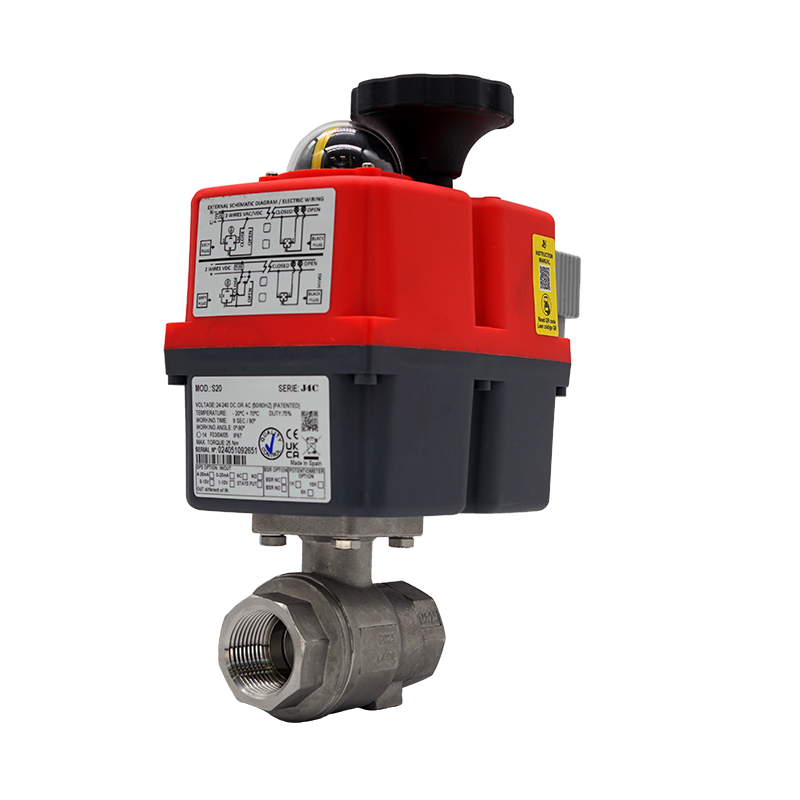
Electric ball valves come with the J4C quarter-turn actuator. Its multi-voltage system accepts 24 V, 230 V and 240 V AC/DC, and the 90-degree running time is roughly nine seconds. Torque ranges from 20 to 300 Nm. The matching J4C electric actuator is also available separately for retrofits.

07 Ball Valves for Water & Gas

Certified ball valves for drinking water and gas carry DVGW approval for gas to DIN EN 13774 and for potable water. WRAS-approved versions serve the UK market. Bodies are made of brass, stainless steel, steel or GGG40. These valves are standard in sanitary installations, gas distribution and municipal water supply.

08 Special Material Ball Valves

For extreme service conditions Fergo supplies special material ball valves. Duplex stainless steel 1.4470 (CD3MN) resists seawater and chloride-rich media. PFA-lined ball valves handle concentrated acids and alkalis, and the conductive PFA-L variant additionally dissipates electrostatic charges in ATEX zones.

Body Materials

1. Stainless Steel 1.4408 / CF8M (AISI 316)

Application: chemical and pharmaceutical processing, food and beverage plants, acids, alkalis, oils, gases, compressed air, demineralised water
Temperature: −25 °C to +180 °C · up to 63 bar
Advantages: high corrosion resistance thanks to molybdenum, hygienic surface, long service life, fully recyclable
Limitations: higher material cost than brass; not resistant to hydrofluoric acid

2. Duplex Stainless Steel 1.4470 / CD3MN

Application: seawater, offshore installations, desalination plants, chloride-rich brines, pulp and paper bleaching lines
Temperature: −25 °C to +180 °C
Advantages: roughly twice the yield strength of standard austenitic grades, excellent pitting and stress-corrosion resistance
Limitations: premium price, longer lead time on larger sizes, restricted above +300 °C

3. Carbon Steel 1.0460 and ASTM A350 LF2

Application: hydrocarbons, natural gas, steam lines, refineries, power generation; A350 LF2 for low-temperature service
Temperature: −46 °C to +200 °C (grade dependent)
Advantages: high mechanical strength, good weldability, proven in Fire Safe and high-pressure designs
Limitations: not suitable for acids, alkalis or chloride-rich media; requires corrosion protection

4. Brass CW617N (nickel- or chrome-plated)

Application: drinking water, heating circuits, sanitary and HVAC installations, compressed air, irrigation systems
Temperature: −15 °C to +90 °C (peaks to +120 °C for one hour) · up to 40 bar
Advantages: excellent machinability for threads, good corrosion resistance in water, economical, WRAS-approved versions available
Limitations: unsuitable for ammonia, aggressive chemicals and highly chloride-rich water

5. Ductile Iron GGG40 and GGG40.3 with PFA / PFA-L Lining

Application: water supply, wastewater, industrial cooling circuits; the PFA-lined variant handles concentrated acids, alkalis and halogens
Temperature: up to +80 °C uncoated · −20 °C to +200 °C with PFA lining
Advantages: high toughness, economical for large sizes; PFA lining adds near-universal chemical resistance, PFA-L dissipates static charges (ATEX)
Limitations: uncoated GGG40 unsuitable for aggressive media; lining sensitive to abrasive solids and mechanical impact

Ball and Seat Materials

1. Stainless Steel Ball 1.4408 / 1.4404 / 1.4301, chrome-plated

Application: standard ball for all stainless steel series; hollow 1.4301 balls reduce weight in larger sizes
Temperature: up to +180 °C
Advantages: chrome plating lowers friction and wear, high dimensional stability under pressure, tight shut-off against the PTFE seat
Limitations: plating can wear under abrasive slurries; unsuitable for hydrofluoric acid

2. Duplex Ball SS32205

Application: seawater and offshore service, paired with the duplex 1.4470 body
Temperature: up to +180 °C
Advantages: outstanding pitting and crevice corrosion resistance, very high mechanical strength
Limitations: special order with surcharge and extended lead time

3. PFA-Lined and PFA-L Conductive Ball

Application: aggressive chemicals in the PFA-lined series; the conductive PFA-L version serves ATEX zones and flammable solvents
Temperature: −20 °C to +200 °C
Advantages: no metal contact with the medium, non-stick surface prevents build-up, PFA-L safely dissipates electrostatic charges
Limitations: restricted with abrasive solids; not resistant to elemental fluorine or molten alkali metals

4. Ceramic Ball

Application: abrasive slurries, crystallising media, high-purity processes with heavy wear
Temperature: up to +200 °C in the valve assembly
Advantages: extreme hardness and wear resistance, chemically inert, very long service life with solids
Limitations: sensitive to impact and thermal shock; special order with surcharge

5. Seats and Seals: PTFE + 15 % Glass Fibre, NBR, FKM

Application: PTFE with 15 % glass fibre is the standard seat across all series; NBR and FKM serve as stem and body seals
Temperature: PTFE up to +180 °C · NBR to +90 °C · FKM to +200 °C
Advantages: glass fibre reduces cold flow and raises pressure rating, PTFE offers near-universal chemical resistance and FDA conformity
Limitations: pure PTFE creeps under sustained load; NBR is not ozone-resistant; FKM is unsuitable for ketones, esters and hot water

Ball Valve Bore Types and Flow Paths at a Glance

The bore geometry determines pressure drop, flow capacity and switching function. A full bore keeps the line resistance minimal, while a reduced bore lowers cost and torque. In three-way valves, the L-bore and the T-bore create entirely different flow paths. The table below assigns each bore type to its typical application.

Bore Type Design Pressure Drop Function Typical Application
Full bore 2‑way minimal bore matches the pipe diameter pigging lines, viscous or solid-laden media, low-loss isolation
Reduced bore 2‑way moderate bore one size smaller than the pipe clean liquids and gases, cost-sensitive projects, lower actuator torque
L‑bore 3‑way moderate connects two of three ports, 90° switching diverting or selecting between two lines, tank changeover
T‑bore 3‑way moderate connects two or all three ports mixing, distributing, straight-through plus branch flow

Do you need a heating jacket, an extended stem or a non-standard material combination? Fergo also builds ball valves to specification. Please contact us through the customised solutions section. You can additionally verify material compatibility with your medium beforehand using the Fergo resistance check.

Fergo ball valves comply with the Pressure Equipment Directive 2014/68/EU and carry the CE mark. Gas applications hold DVGW approval to DIN EN 13774, and separate DVGW approval covers drinking water. WRAS certification applies to potable water installations in the United Kingdom. Emission-relevant plants are served by TA-Luft compliant designs, while Fire Safe versions maintain shut-off in the event of fire.

Safety-instrumented systems can draw on SIL 3-rated models, and AD2000 Merkblatt A4 versions suit German pressure vessel codes. Flange connections follow EN 1092-1 and ANSI B16.5, face-to-face lengths EN 558-1 and ANSI B16.10, and actuator interfaces ISO 5211. Inspection documents to EN 10204 — type 2.2 works certificate or type 3.1 inspection certificate — are available on request. A full overview of all certificates is published on the Fergo certificate page.

Fergo holds more than 25,000 industrial valves in stock. Over 1,100 of them are ball valves across the KH104, KH105, KH109, KH113, KL103 and KL113 series — in every common nominal size, material and actuation type. Orders are picked the same working day. Express shipping therefore delivers within the next working days.

Fergo ships across Europe — including the United Kingdom, the Nordic countries and all other EU member states. Smaller threaded valves travel by parcel service, whereas heavy flanged valves and consolidated shipments go by forwarding agent. You will find shipping costs, payment options and express terms on the shipping and payment terms page. For project quantities, special materials or complete automation packages, the Fergo sales team will prepare a quotation at short notice.